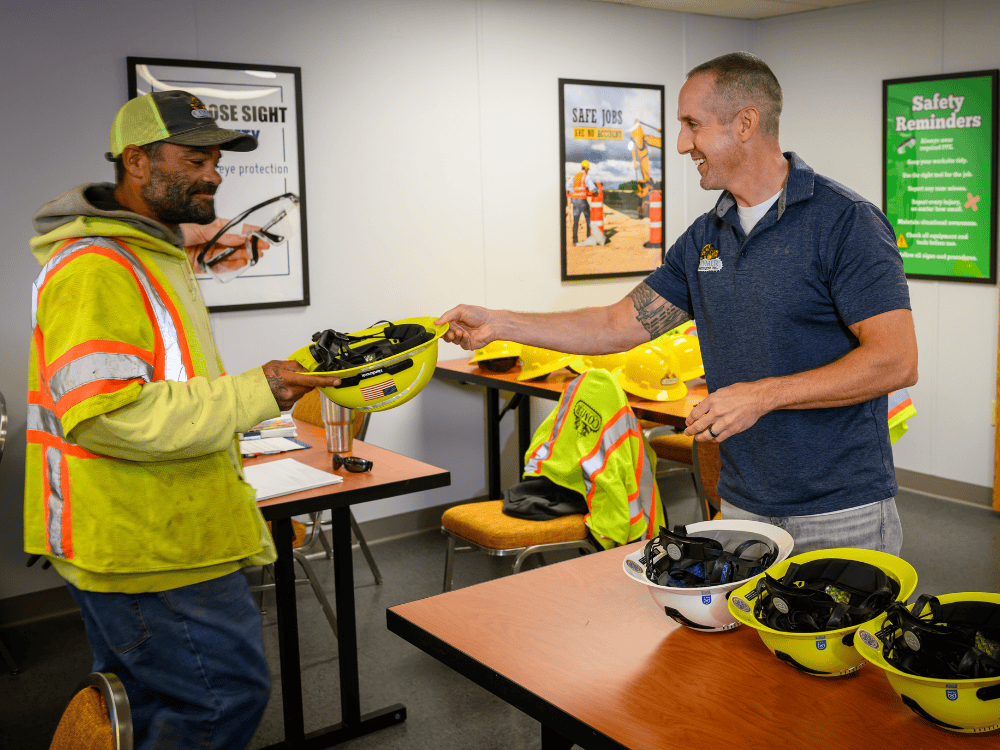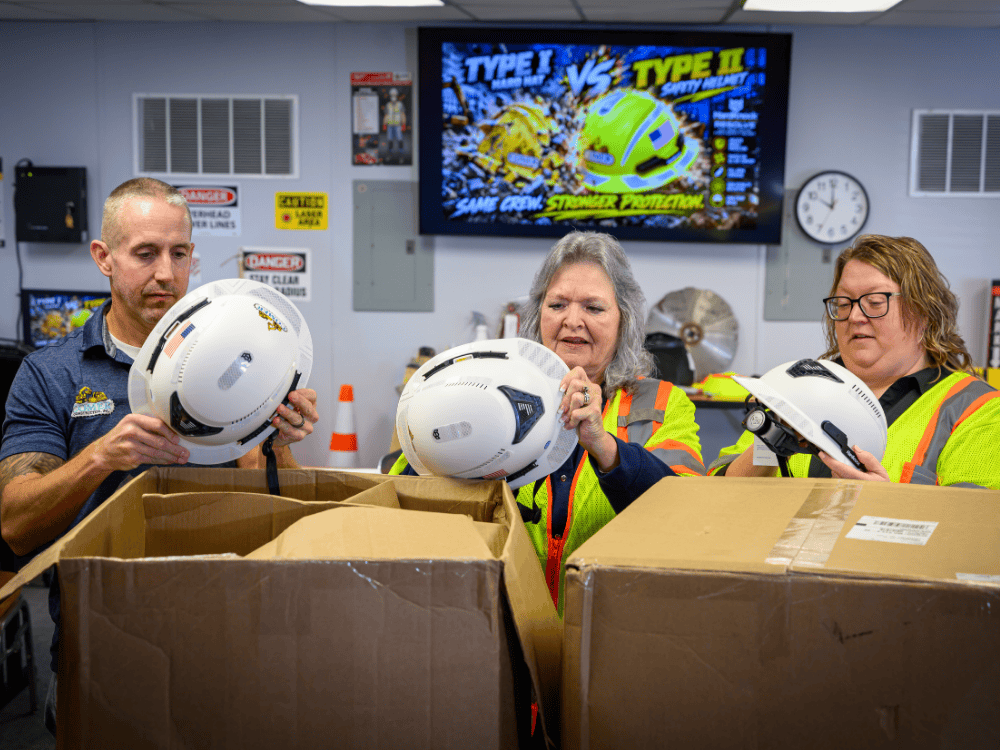
Comer Construction’s whole field team has traded in traditional hard hats for Type II safety helmets. The switch is part of a pilot program with the Job-Site Safety Institute (JSI) and North Carolina State University. The pilot studies what it takes to make that change on active construction sites.
JSI funded a research grant to NC State on September 1, 2026, and Comer Construction was selected as the contractor partner. The pilot runs through 2027.
Why head protection is getting a second look
The standard hard hat was designed mainly to protect the top of the head from falling objects. That’s still a real hazard. But a lot of serious head injuries on a job site come from other directions: slipping, tripping, falling, or hitting your head on equipment.
“25% of all deaths are through traumatic brain injuries, and so if there’s a way we can reduce that, that’s going to be a huge impact on the construction industry,” said Erik Anderson, Board Chairman of the Job-Site Safety Institute, in the WMAR-2 News segment.
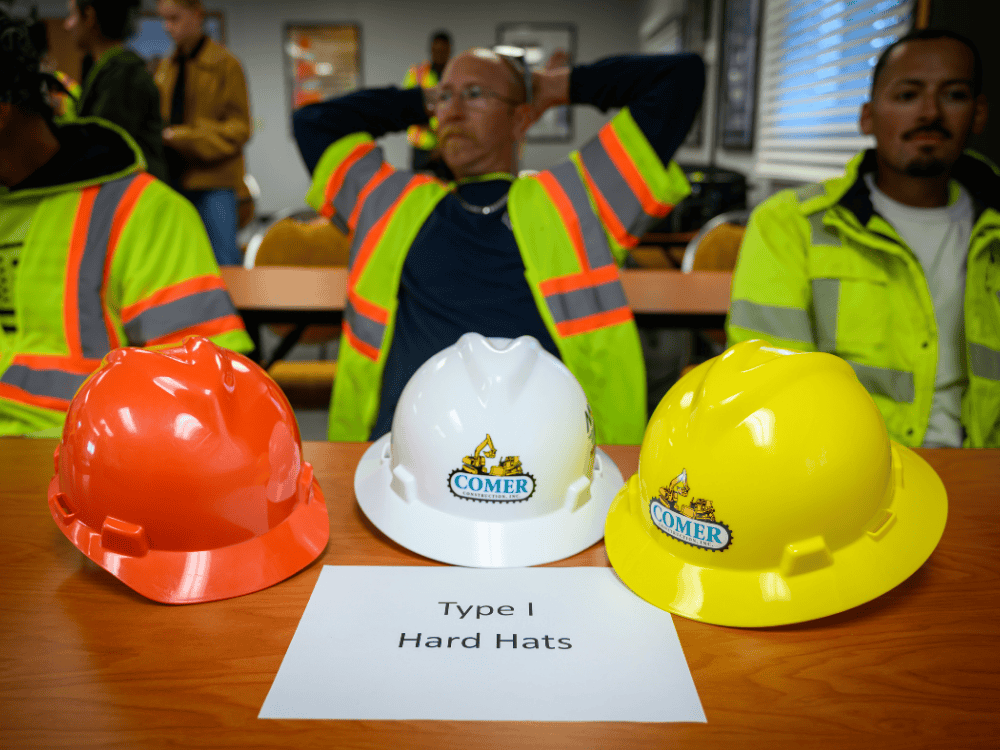
The traditional hard hats Comer Construction’s team wore before the switch.
What makes a Type II helmet different
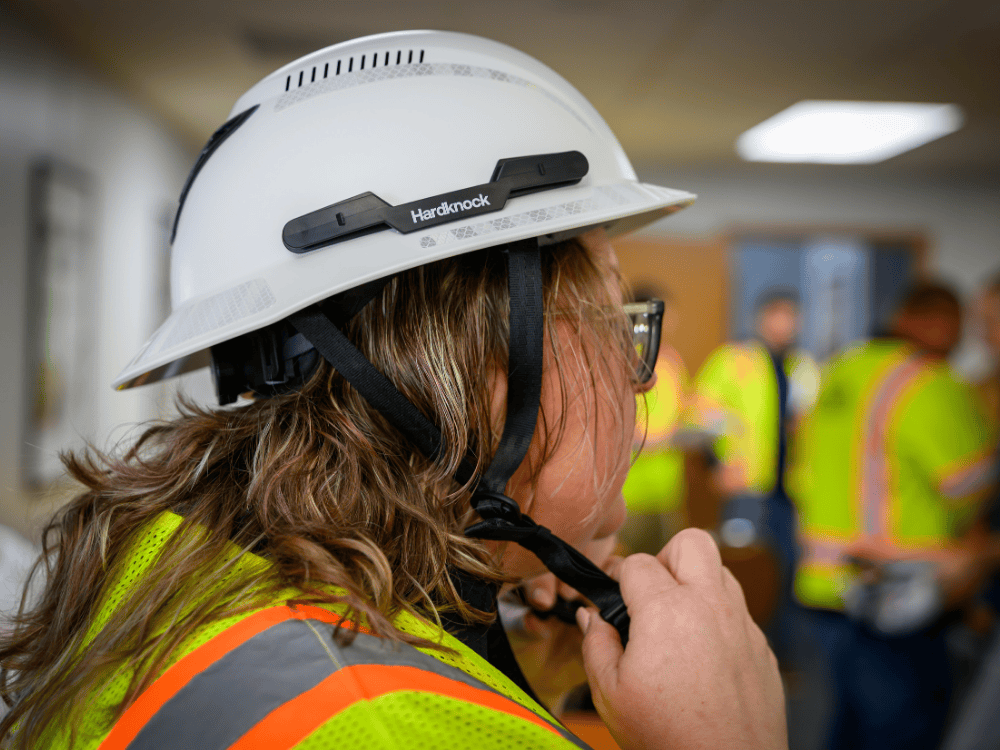
Type I hard hats protect the top of the head and usually don’t have a chin strap. Type II helmets are built to also reduce the force of impacts to the sides of the head, and they come with a chin strap so they stay put during a fall.
Earlier NC State research found that most workers didn’t know there was a difference between the two. Once they understood that a Type II helmet protects more of the head, most were on board with switching.
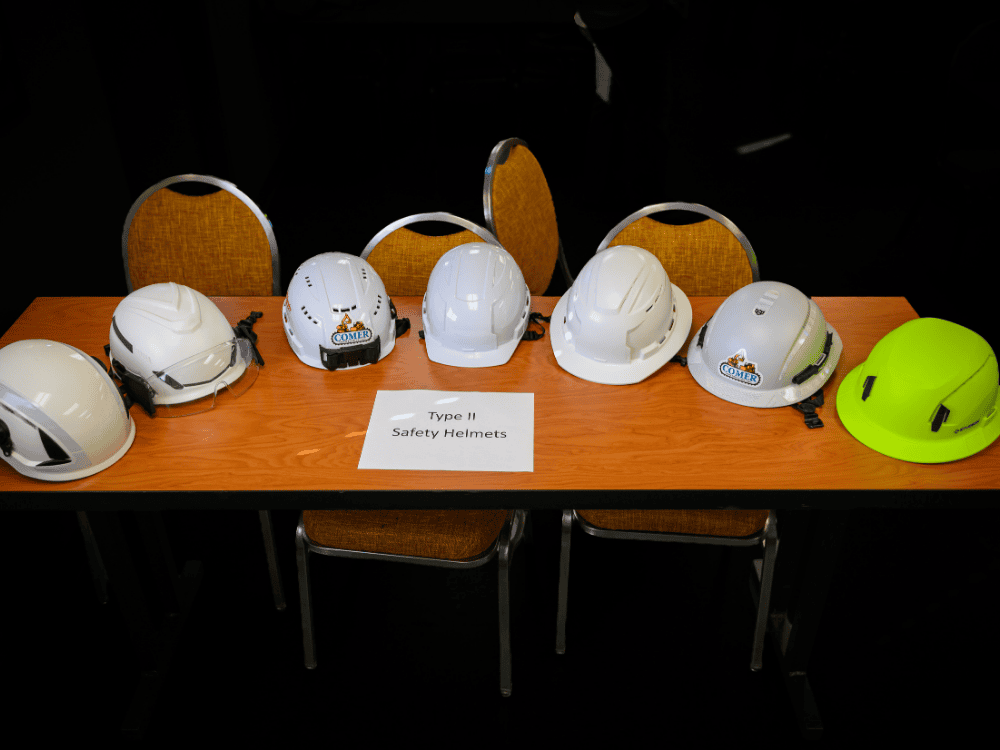
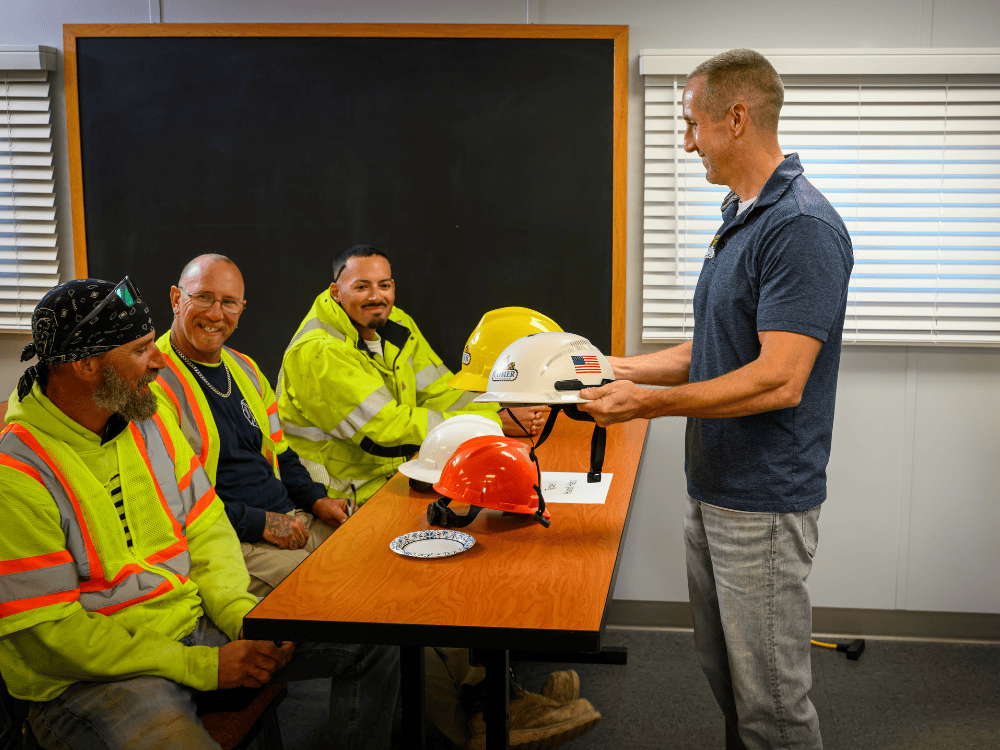
Some of the Type II safety helmets the team reviewed.
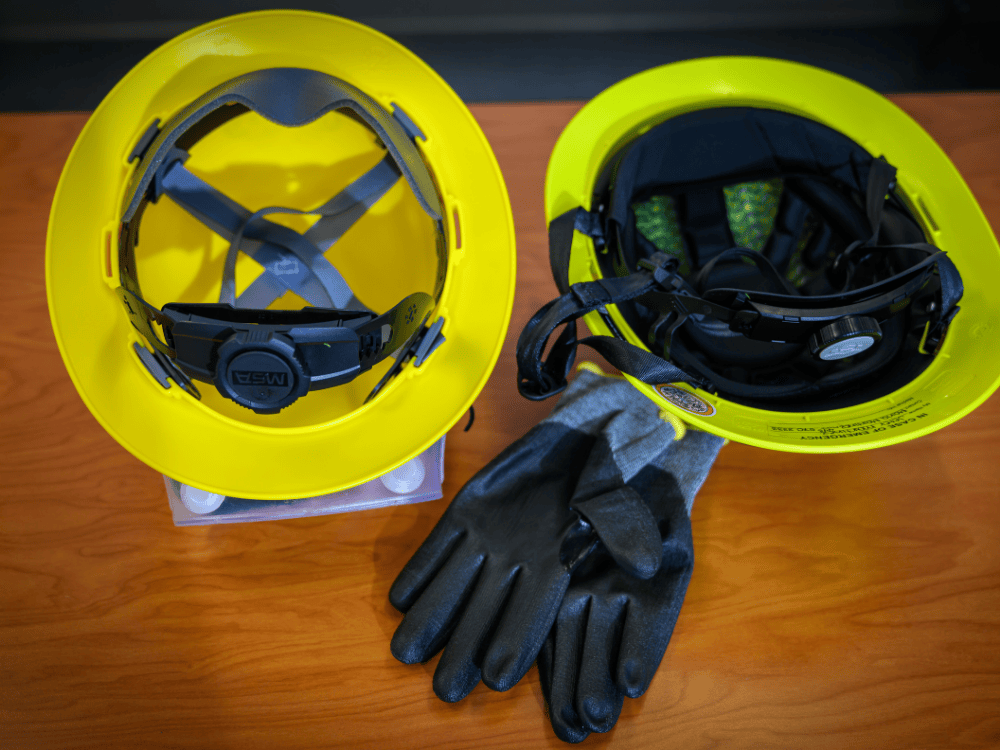
Inside a traditional hard hat (left) and a Type II helmet (right).
What the pilot will look at
NC State’s research covers how the helmets perform in falls and struck-by or struck-against incidents. It also covers the everyday stuff that decides whether a helmet actually gets worn: comfort, fit, and how well it stays on.
That’s where Comer Construction comes in. Site construction work puts crews around heavy equipment, trenches, and changing grades all day. The pilot will track how the helmets work on those sites, what the transition takes, and what other contractors would need to know to make the same switch.
Because the whole team switched, researchers can look at how workers respond before and after the transition. Alex Albert, associate professor in NC State’s Department of Civil, Construction, and Environmental Engineering, said that’s what makes the pilot a unique opportunity. Researchers can study how adoption works with a real crew on real job sites.
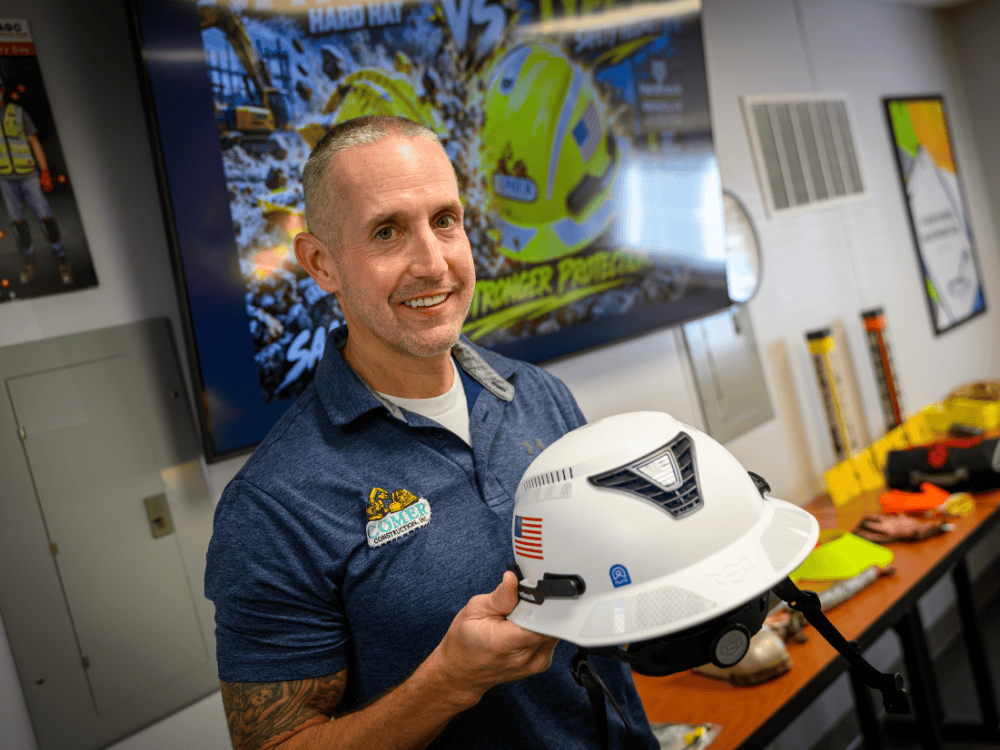
“There’s so much more safety out there that we didn’t know about originally, that we wanted to put into place for our employees,” said Tim Kaptein, Director of Safety at Comer Construction. “We care about them and want them to go home at the end of the day.”
Safety is about doing the right thing
Comer Construction’s safety motto is “Safety is first. Safety is about doing the right thing even when no one else is looking.” Switching the whole team to Type II helmets is one more way the team lives that out.
The company’s safety program has been recognized by the Maryland Associated General Contractors, Miss Utility, and the National Association of Home Builders. That track record is part of what made Comer Construction a fit for this work.