Project Quick Facts
- Project: Carolyn E. Fugett Intergenerational Center – Catholic Charities of Baltimore
- Services: site clearing and grading, stormwater management, underground utilities, roadwork and paving
- Location:800 Poplar Grove Street, Baltimore, MD 21216
- Timing: June 2024 to June 2026
- General Contractor: The Whiting-Turner Contracting Group
- Project Manager: Burt Miller
At the corner of Poplar Grove Street and Garrison Boulevard in West Baltimore, a former elementary school is becoming something the neighborhood has been working toward for over a decade.
Catholic Charities of Baltimore is redeveloping the former Alexander Hamilton Elementary School — a 55,000-square-foot building on a 3.5-acre campus — into the Carolyn E. Fugett Intergenerational Center, a $32 million community hub named for longtime West Baltimore activist Carolyn E. Fugett. Set to open in Spring 2026, the Fugett Center will bring together early childhood education, workforce development, food access, behavioral health services, and community programming — all in one place, serving people from infancy through older adulthood.
Comer Construction joined the project in June 2024 as the site development contractor, working under General Contractor The Whiting-Turner Contracting Company.
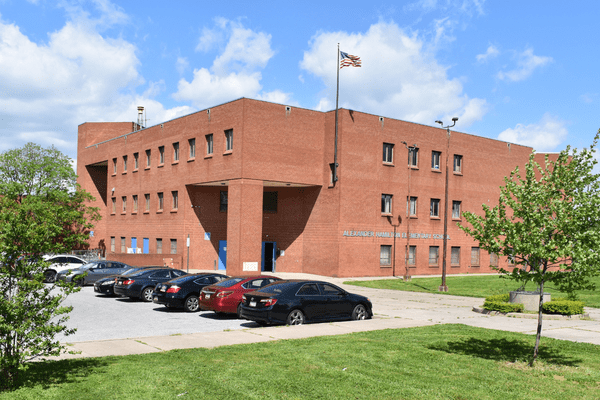
Photos show the building before renovations and a rendering of the finished project.

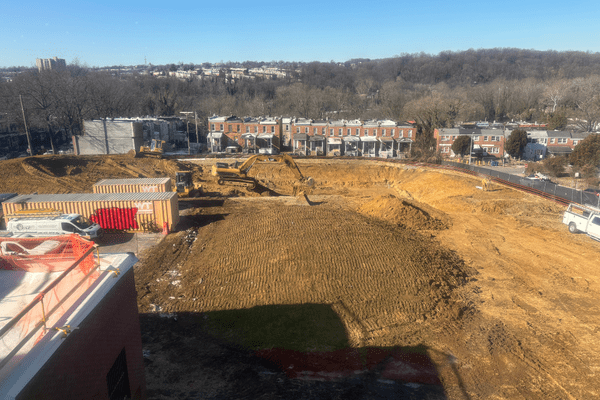
The 3.5-acre campus required a complete transformation from the ground up. Comer’s crews cleared and graded the site, reshaping the terrain to accommodate new infrastructure, revised parking and circulation layouts, and updated access points on all sides of the building. From overhead, you can see the scale of the earthwork required.
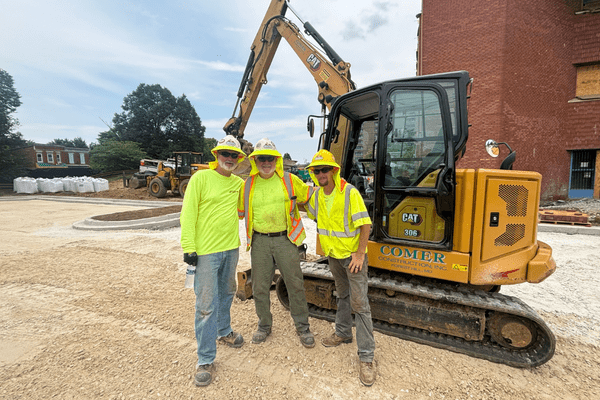
Much of the work happened in close quarters. The site sits in a dense urban neighborhood, with rowhouses on multiple sides and an active construction zone throughout. Working with a mini excavator and precise grading equipment, the team navigated the tight site while keeping the surrounding area protected.
Underground Utilities
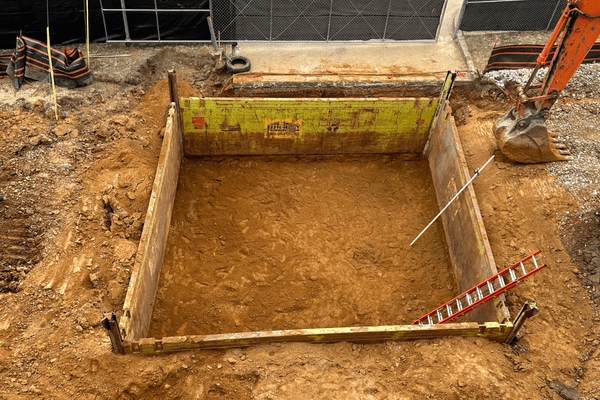
All underground utility infrastructure for the new facility was installed by Comer Construction’s crew, coordinated with engineered plans, local code requirements, and the needs of a building that will simultaneously house healthcare, education, food distribution, and workforce training. The trench box kept excavations safe and stable throughout.
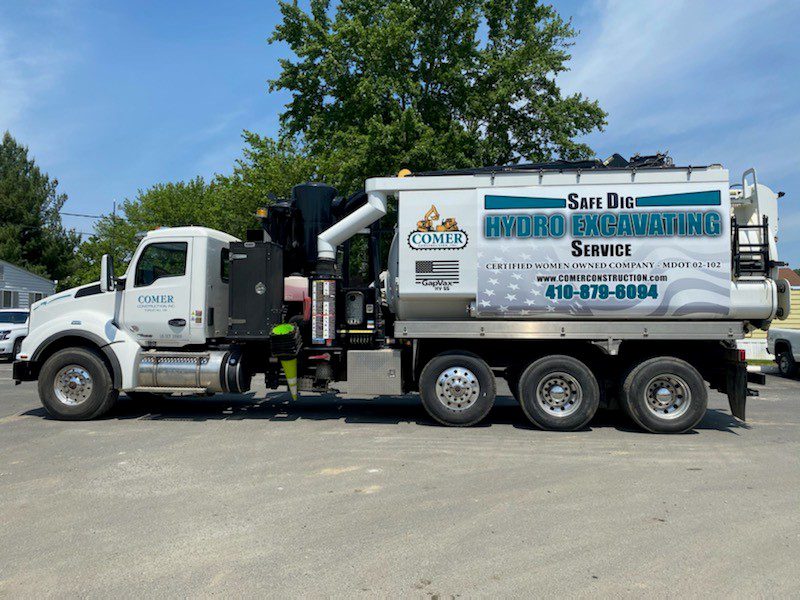
Where underground lines ran close to existing utilities, Comer used hydro excavation to safely expose them — using pressurized water to break up soil rather than mechanical digging, which reduces the risk of damaging buried pipes, cables, or conduit. It’s a precision approach that’s increasingly standard practice on urban infill sites where the ground is full of existing infrastructure that can’t be disturbed.
Stormwater Management
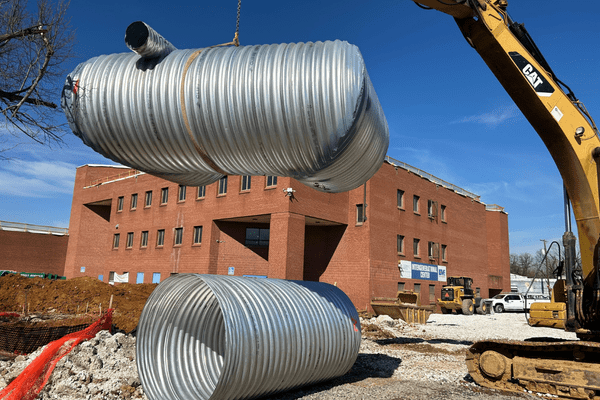
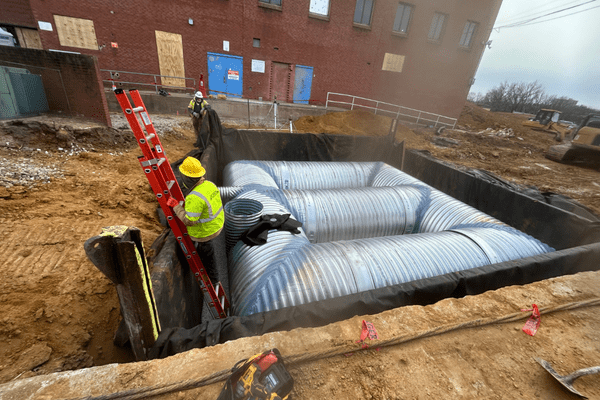
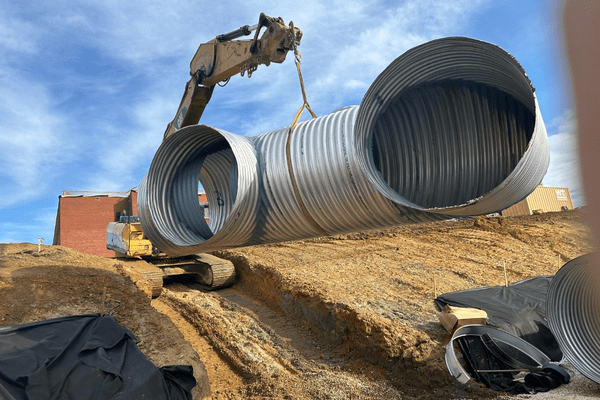
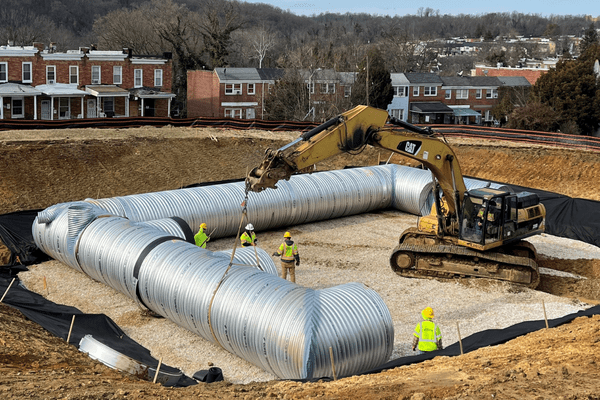
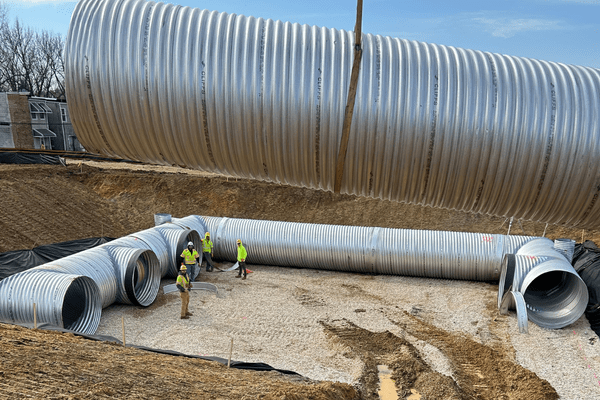
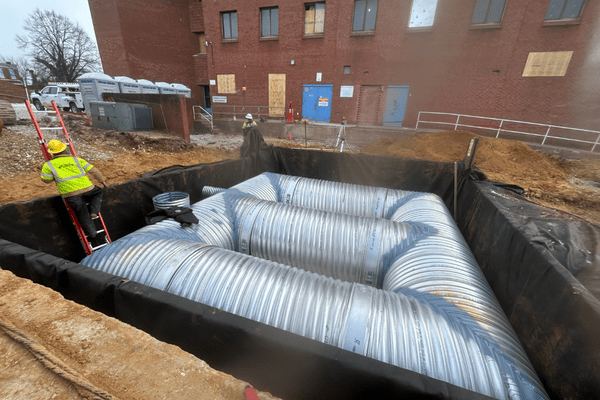
The stormwater system at the Fugett Center is one of the more complex pieces of this project — and the photos give a sense of why. Large corrugated metal detention pipes, some several feet in diameter, were staged, lifted into position, and assembled underground to create a subsurface detention system that will manage runoff from the entire campus for decades to come.
Getting the system in required precise excavation, careful sequencing, and hands-on coordination between equipment operators and crew working below grade. The finished vault — lined, backfilled, and buried — will be invisible once the site is complete, which is often the nature of this kind of work. The most important infrastructure is the kind no one ever sees.
Finishing the Site
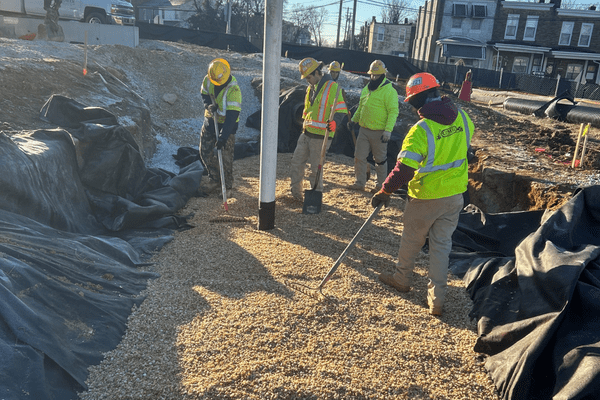
With the underground work complete and the building’s new exterior taking shape in the background, Comer’s crew completed curb and gutter construction, asphalt paving, and site finishing work — including revised parking layouts, updated drop-off access to the south, and revised loading dock access to the north.
The Bigger Picture
The Fugett Center is named for Carolyn E. Fugett, a West Baltimore community advocate whose work touched countless families in the Greater Rosemont neighborhood. The facility is the product of more than ten years of planning, community investment, and relationship-building by Catholic Charities — and it will serve as home to an extraordinary range of programs: nine Head Start and Early Head Start classrooms (the largest Head Start site in Baltimore City), a relocated food pantry that served nearly 8,000 households last year, workforce training, behavioral health services, youth sports programming, and Safe Streets community violence intervention work.
It’s a significant project for West Baltimore. For Comer Construction, it’s a reminder of why site development matters — the infrastructure work that happens before a building opens is what makes everything else possible.
About Comer Construction
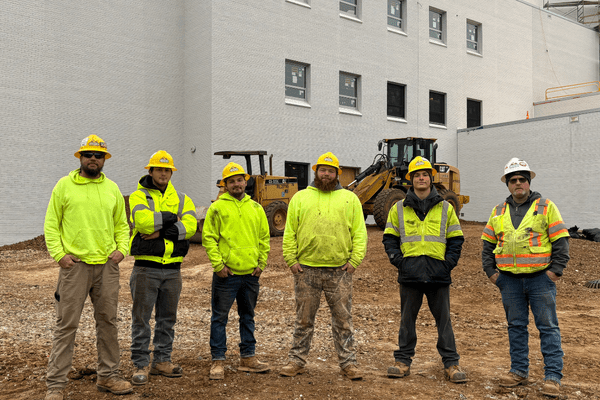
Comer Construction is a women-owned, Minority Business Enterprise (MBE) and a leading Maryland-based site development contractor specializing in excavation, grading, underground utilities, stormwater management, and paving. Since 1982, we’ve built a reputation for quality work on projects ranging from neighborhood redevelopments like this one to large-scale infrastructure across the Greater Baltimore Region and Mid-Atlantic.
Get to know Comer Construction:

Grading & Excavation

Maintenance of Traffic

Road Work & Paving

Utilities

HydroVac Truck